
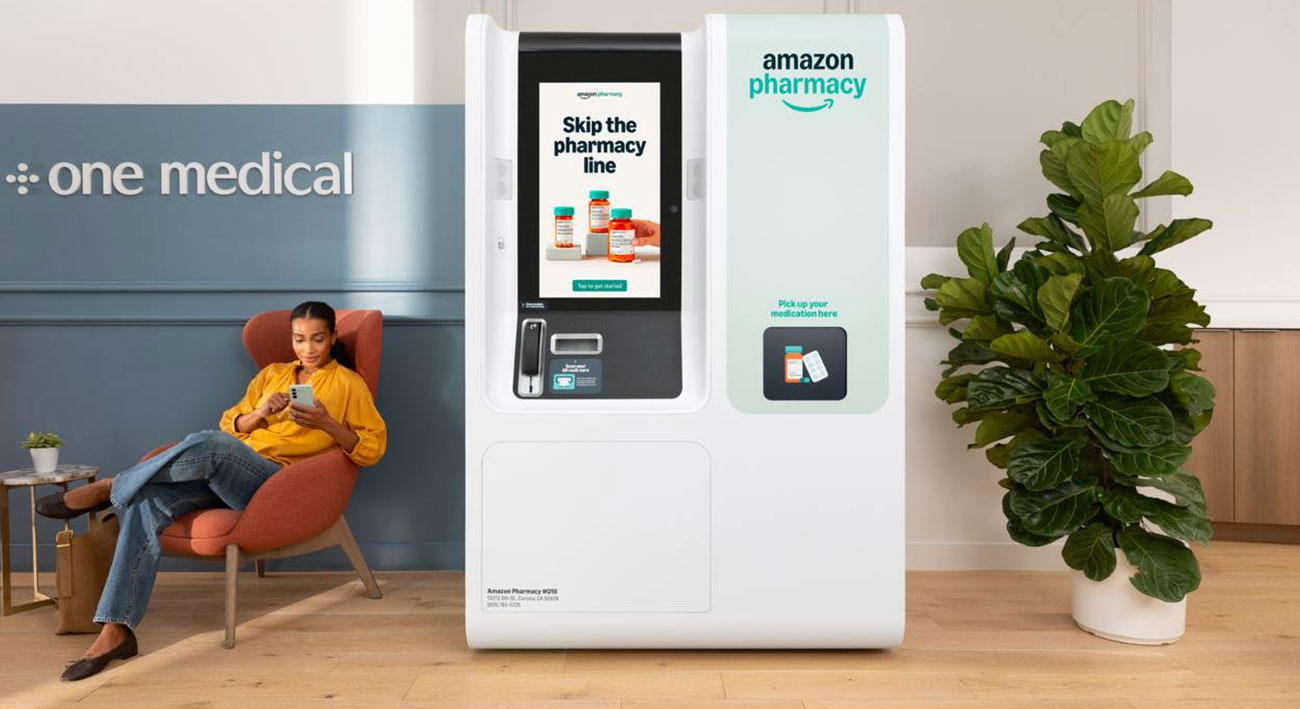
The first Amazon pharmacy kiosks have begun operating in the US
Amazon has begun installing the first pharmacy kiosks in its clinics, allowing patients to pick up their medications immediately after seeing a doctor. Professional pharmacist associations have spoken out against the innovation.
Amazon has unveiled its first pharmacy kiosks at clinics in its One Medical network in Los Angeles, California. Next year, it plans to roll them out across the country, according to a press release from the tech giant.
Patients can now receive their prescribed medications immediately after seeing a doctor. They receive a notification about their prescription in the Amazon app. There, they confirm and pay for their order (the cost is immediately calculated taking into account insurance coverage), after which a QR code is issued, which must be scanned by the machine.
The kiosks are stocked with hundreds of the most commonly used medications, including antibiotics, inhalers, and hypertension medications. The list is customized for each clinic, and doctors can check whether the necessary medication is available in the machine when prescribing it. Substances whose circulation is strictly regulated by law (narcotics, psychotropic drugs, etc.), as well as medicines that require storage at low temperatures, are excluded from the range.
The launch of the kiosks drew criticism from the National Community Pharmacy Association (NCPA). The organization's head, Douglas Howe, said in an interview with Specialty Pharmacy Continuum that this model reduces pharmaceutical care to a simple purchase of goods and ignores the importance of personal interaction between the patient and a specialist who has undergone many years of training in pharmacotherapy and drug safety. In addition, the NCPA is concerned that when selecting treatment, doctors will be forced to focus on the limited range of medicines available in kiosks rather than the individual needs of patients.
In response, an Amazon representative noted that the machines are not intended to replace traditional pharmacies, but to complement them in solving the problem of prescription fulfillment: Americans do not pick up nearly a third of their prescribed medications because of the need to visit a pharmacy after seeing a doctor. The company added that their kiosks allow users to contact a pharmacist immediately via video link if necessary, and additional medications can be ordered through the Amazon Pharmacy online pharmacy.
In 2018, Amazon bought the online pharmacy PillPack for $1 billion, and in 2020, it launched Amazon Pharmacy, through which users can order medications and refill prescriptions via the website or smartphone with home delivery to most regions of the country. In 2022, the corporation acquired One Medical, a network of modern subscription-based primary care clinics, for $3.9 billion. The placement of kiosks in these clinics closes the loop: patients receive consultation, diagnosis, and medication in one place.
The development of automated dispensing of medicines is taking place against the backdrop of a crisis among traditional pharmacy retailers in the United States. In October 2025, following its second bankruptcy, the Rite Aid chain closed its last pharmacies — at its peak, it had over 5,000. CVS has closed more than 1,000 locations since 2021, and Walgreens has closed about 500 over the past year.
Source: Specialty Pharmacy Continuum